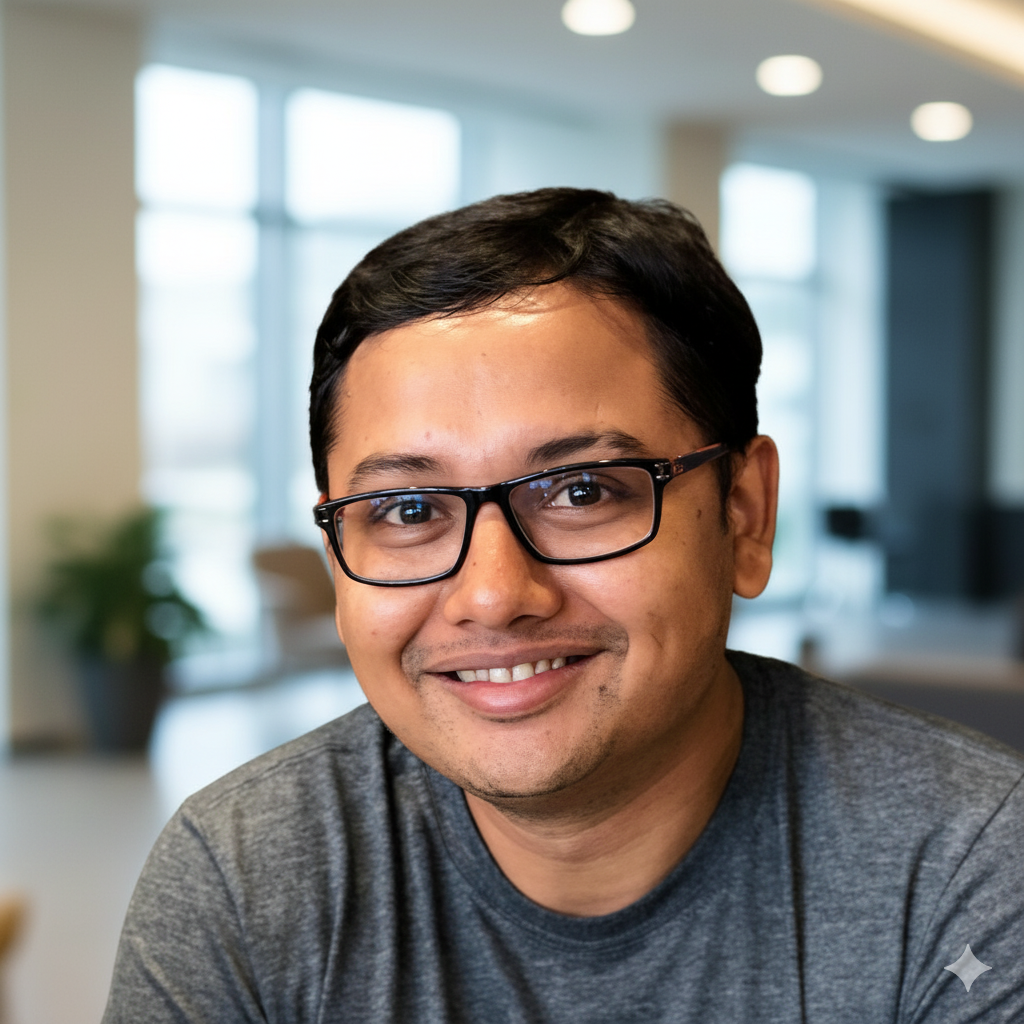
In 2022, an AI-generated painting won a state fair art competition, igniting a fierce debate about the nature of creativity. By 2025, AI image generation has moved from curiosity to commodity -- millions of images are generated daily for marketing, game design, personal projects, and artistic exploration. But how does a machine create an image from a text description? The answer involves some of the most elegant mathematics and engineering in all of AI.
A Brief History of AI Image Generation
The quest to generate realistic images with AI has spanned multiple technological eras.
Variational Autoencoders (VAEs, 2013)
VAEs were among the first deep generative models that could produce novel images. They work by encoding images into a compact latent space and then decoding samples from that space back into images. While VAEs produced blurry results, they introduced the crucial concept of a latent space -- a compressed representation where similar images cluster together and you can interpolate between them smoothly.
Generative Adversarial Networks (GANs, 2014)
Ian Goodfellow's GANs revolutionized image generation with an adversarial training framework: a generator network creates images while a discriminator network tries to distinguish them from real images. Through this competitive process, the generator learns to produce increasingly realistic outputs. StyleGAN (2019) could generate photorealistic human faces that were indistinguishable from real photographs.
Diffusion Models (2020-Present)
Diffusion models have become the dominant paradigm. They work by learning to reverse a gradual noising process: given pure noise, the model learns to iteratively remove noise, step by step, until a clear image emerges. Combined with text conditioning, this enables the text-to-image generation that powers DALL-E, Midjourney, and Stable Diffusion.
The progression from VAEs to GANs to diffusion models mirrors a broader trend in AI: simpler, more stable training procedures that scale better with data and compute tend to win in the long run.
How Diffusion Models Generate Images
Since diffusion models power most modern image generators, understanding them is essential.
The Forward Process: Adding Noise
Training begins with real images that are progressively corrupted by adding Gaussian noise over many steps (typically 1000). At each step, a small amount of noise is added until the image becomes pure random noise. This forward process is simple and doesn't require learning.
The Reverse Process: Removing Noise
The neural network learns to reverse this process: given a noisy image and the current noise level (timestep), it predicts the noise that was added. By subtracting this predicted noise, the image becomes slightly clearer. Repeating this for many steps transforms random noise into a coherent image.
Text Conditioning
To generate images from text, the model is additionally conditioned on text embeddings produced by a language model (typically CLIP). These embeddings guide the denoising process so that the generated image matches the text description. Classifier-free guidance amplifies the influence of the text conditioning, trading diversity for fidelity to the prompt.
Key Takeaway
Diffusion models work by learning to reverse the process of adding noise to images. At generation time, they start from pure noise and iteratively denoise, guided by text prompts, to create images that match the described content.
The Major Platforms
DALL-E (OpenAI): Now in its third iteration, DALL-E 3 is integrated into ChatGPT and known for exceptional prompt adherence. It excels at following complex, detailed instructions and rendering text within images. OpenAI's safety filters and content policies are the most restrictive among major platforms.
Midjourney: Favored by artists and designers for its distinctive aesthetic quality. Midjourney V6 produces highly stylized, visually striking images with excellent composition and lighting. It operates through Discord and its own web interface, with a community-driven approach to development.
Stable Diffusion: The open-source alternative, allowing full local control over the generation process. With SDXL and SD3, Stability AI has produced models that rival closed-source competitors. The open-source nature has spawned an enormous ecosystem of fine-tuned models, ControlNets, and custom pipelines.
Flux: Developed by Black Forest Labs (founded by former Stability AI researchers), Flux models have pushed the state of the art in prompt adherence and image quality. The Flux.1 family offers models at different quality-speed tradeoffs.
Beyond Text-to-Image
Image generation AI has expanded far beyond simple text-to-image conversion.
- Image-to-image -- Transforming one image into another based on text guidance, preserving structure while changing style or content
- Inpainting -- Editing specific regions of an image while keeping the rest unchanged
- Outpainting -- Extending an image beyond its original borders
- ControlNet -- Guiding generation with structural inputs like edge maps, depth maps, or pose skeletons
- Style transfer -- Applying the artistic style of one image to the content of another
- Image upscaling -- Enhancing resolution and detail of low-resolution images
The Creative and Ethical Landscape
AI image generation has sparked intense debates about creativity, ownership, and the future of visual arts.
Copyright and Training Data: Most models are trained on images scraped from the internet, often without creator consent. Ongoing lawsuits from artists and stock photo companies challenge the legality of this approach. Some newer models are trained exclusively on licensed data to avoid these issues.
Impact on Creative Professions: Stock photography, concept art, illustration, and graphic design are all affected. Some professionals view AI as a threat to their livelihoods; others embrace it as a powerful creative tool that democratizes visual expression. The reality is nuanced -- AI excels at certain types of imagery while struggling with others.
Deepfakes and Misinformation: The ability to generate photorealistic images raises concerns about misinformation, fraud, and non-consensual imagery. Detection tools, watermarking (like C2PA standards), and provenance tracking are developing in response, though they remain imperfect.
Key Takeaway
AI image generation is a transformative technology that empowers new forms of creative expression while raising serious questions about intellectual property, authenticity, and the economic impact on creative professions. Responsible use requires awareness of these issues.
We are living through the most significant transformation in image creation since the invention of photography. AI image generation isn't replacing human creativity -- it's redefining what it means to create, expanding who can participate in visual expression, and challenging our assumptions about the nature of art itself.